UNBEATABLE
un·beat·a·ble (ŭn-bē'tə-bəl)
–adjective
1. incapable of being beaten; impossible to defeat: an unbeatable soccer team.
2. of surpassingly good quality; excellent: an unbeatable combination of brains, bodies and talent. of that hwachong soccer girls.


profile
prints
stories
network
HWA CHONG SOCCER GIRLS
TEAM 2008/09
ALL POWER ON THE LOOSE
BEWARE
TEAM 2008/09
ALL POWER ON THE LOOSE
BEWARE
10 January, 2009
Basic First Aid
Hello here are the relevant stuff i learnt recently from my First Aid Course.
Open Wounds
Abrasion (Grazing) Wounds:
- Caused by sliding fall or friction
- Top most layer of skin affected
- Raw area exposed
- Embedded foreign particles
- Infection likely!
Puncture Wounds (in case of pokey stuff lurking amongst grass):
- Caused by elongated object
- Small entry site
Treatment
For Minor Cuts:
- Wash cuts under running water or use alcohol-free wipes
- Dry and cover wound
- Wash off or remove any foreign particles with tweezers (latter requires steady hands and confidence!)
Direct Pressure Application (,Moderate-Heavy Bleeding):
- Elevate Affected Part
- Position Casualty flat on floor
- Monitor pulse, respiration and level of response
- Check circulation at finger (Press finger to check, capillary refill)
In case of Impalement or Presence of embedded particles:
- Control bleeding without pressing the object(s) into the wound
- Pressure is applied indirectly on both sides of wound
- Do not remove foreign objects as removal can worsen condition
Eye Injuries
Signs and Symptoms:
- Pain and spasm of eyelids
- Bloodshot eyes
- Partial or total vision loss
- Leakage of blood or clear fluid from wound
Treatment:
- Pad and Bandage
Ear Bleed
Causes:
- Impact to side of head
- Poked by foreign object
- Explosion
Signs and Symptoms:
- Sharp pain
- Ear ache
- Deafness
- Watery Blood
Precaution:
- Watery blood indicates skull fracture
- Leakage of fluid in skull cavity
- Do not tilt casualty's head
Treatment (In case of absence of watery blood)
- Place casualty in half sitting position
- Tilt head to side to discharge fluid
- Apply pad lightly to ear
Nose Bleed
Cause
- Blow to nose
- Sneezing
- Picking of nose ):
Precaution
- Watery blood indicates skull fracture
- Do not tilt casualty's head
Treatment
- Sit casualty with head leaning slightly forward
- Pinch soft part of nose for 10 minutes
- Repeat pinching if necessary
- Do not speak, swallow, cough, spit or sniff during treatment unnecessarily
- If nosebleed is severe ask for medical assistance!
Contusion (Bruise/Haematoma)
Causes
- Caused by blunt blow or punch
- Capillaries bleed under skin
- Blood oozes when skin breaks (yuck)
- Not normally serious but for severe contusion, more threatening cases of hematoma (pooling of blood outside blood vessels can develop
Treatment
- A cold compress can be placed over affected area for 20-30 minutes to reduce swelling
- Do no apply ice directly to skin, wrap ice in towel
- If bruise takes up large area of limb, ensure that limb is elevated (higher than heart) for 24 hours to divert more blood flow to main circulation
- After 2 days, a warm cloth can be applied to bruise for 10 minutes 2 or 3 times a day to increase blood flow to bruise and allow blood to be reabsorbed more rapidly
I shall continue with fractures, sprains, strains, heat exhaustion and heatstroke on my next post (:
I need to study so Arsenal might win Bolton!
Arsenal vs Bolton, 2255pm on Football Channel CH27 on Starhub, and darn! Aston Villa is leading West Bromwich Albion 2-1! Plz plz plz score WBA!
Pertaining to the really random conversation over turtles and tortoises :
General Information
Turtles and tortoises are ectotherms (reptiles) of the order Testudines, crown group of surperorder Chelonia. Turtles breathe air and lay eggs on land and have a special bony or cartilaginous shell developing from their ribs. The oldest turtles date from 215 million years ago and are more ancient than lizards and snakes!
The largest turtle is the Leather-Back Sea Turtle while the smallest is the Speckled Padloper Tortoise.
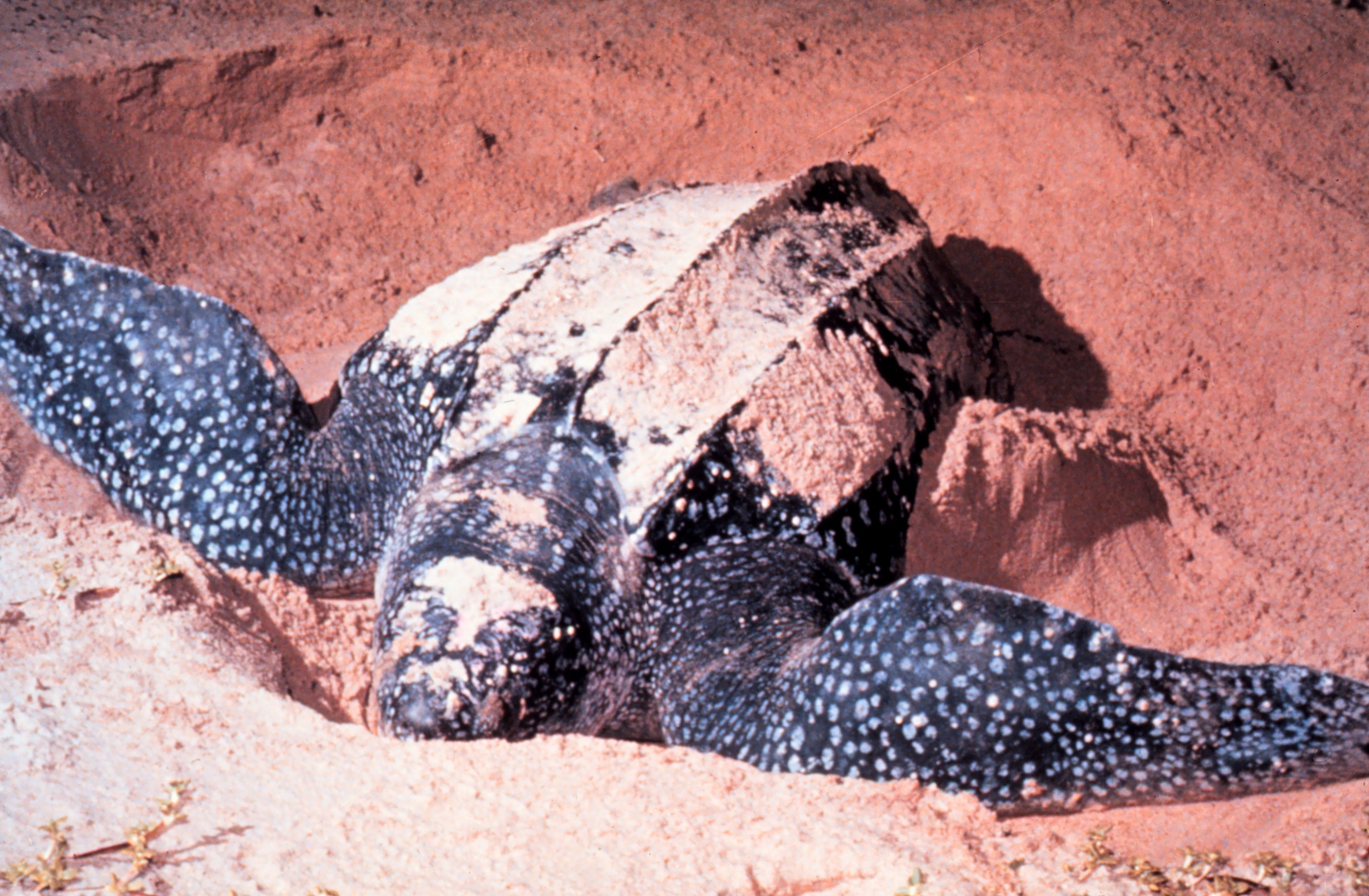
The Leather-Back Sea Turtle is a critically endangered species

The Southern Speckled Padloper Tortoise is a near threatened species.
Turtles can be differentiated according to the way they draw in their little heads. Turtles of the suborder Cryptodira draw their neck in while contracting their spines while turtles of the suborder Pleurodira do so by contracting their necks to the side. Terrestrial turtles have their eyes looking down on objects in front of them while aquatic turtles generally have eyes nearer to the top of their heads. Turtles are also thought to have excellent night vision due to the high number of rod cells found in their eyes.
A turtle's beak can give us clues regarding its diet. In general most beaks are rigid, carnivorous turtles have horny ridges on their top and bottom jaws while herbivorous turtles have serrated-edged ridges to help chew plants. Similarly, a turtle's shell can give indication to whether it is primarily terrestrial or aquatic. A terrestrial turtle generally has a heavy domed-shaped shell to prevent being crushed between predators' jaws. Aquatic and soft-shelled turtles have lighter,more streamlined shells for more efficient locomotion and to prevent sinking in the water. These shells have air spaces called fontanelles and are generally lighter than their land-based counterparts due to the absence of scutes.
Like other reptiles, the shell of the turtle molts and although not as drastic and obvious as the snake's, bits of sloughed off skin (plasticky stuff) can be seen floating in aquariums with turtles.
Land turtles have short sturdy feet, due to their heavy and cumbersome shell, their stride length is drastically reduced, hence, resulting in the tortoise's infamy (or is it?) for its slow movement. Amphibious turtles on the other hand have limbs that are webbed and clawed. They swim in Dog-paddle style. The Pig-nosed Turtle is an amphibious turtle whose limbs have evolved into true flippers with very tiny claws. Aquatic turtles (sea turtles) have flippers for limbs. They swim in an up-down motion (much like flying through water) using thrust from their front flippers while their hind flippers serve as rudders for steering. They have limited mobility on land.

The Pig-nosed Turtle is a vulnerable species.
Turtle, Tortoise of Terrapin?
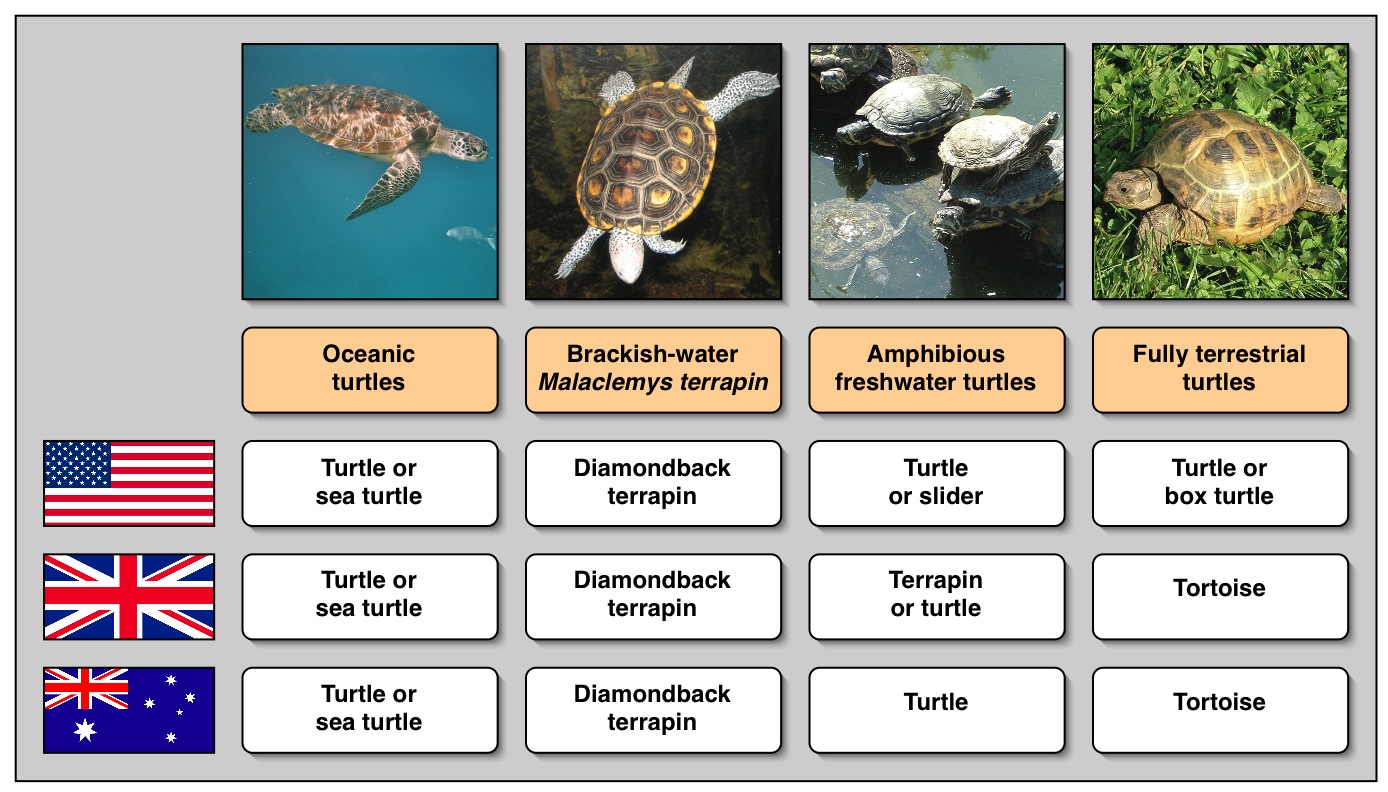
To avoid confusion, professionals like veterinarians, scientists and conservationists refer to them as CHELONIANS.
Turtles as Food
Turtle flesh is considered a delicacy in many Oriental cultures and even in Western cuisine.
Turtle soup is a prized delicacy in both Asian and Western countries. In the United States, turtle soup is made commonly made from the Common Snapping Turtle (Snapper Soup) and the Green Turtle. In many US jurisdictions, many turtle species cannot be legally poached as they are considered threatened or endangered. Also, turtle populations cannot swiftly recover from the loss of breeding adults and hence killing turtles for soup can cause population levels to fall below healthy levels. ): In Singapore, turtle soup is made with innards and meat and skin of the Pelodiscus Sinensis or Chinese Soft-shelled Turtle. This dish is a prized delicacy and is known for its rich herbal taste.

The Green Turtle is an endangered species.

The Common Snapping Turtle is not endangered or threatened.
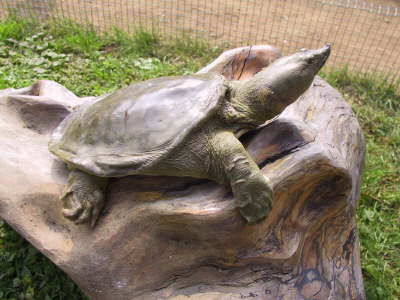
The Chinese Soft-shelled Turtle is a vulnerable species.
Guilinggao is a Chinese herbal jelly that is made with powdered shell from the critically endangered Cuora Trifasciata or (Golden Coin Turtle). Commercially available Guilinggao do not contain turtle shell powder. It is purpoted that the Emperor Tongzhi nearly cured his smallpox by consuming Guilinggao, however, the Empress Dowager Cixi managed to convince him to instead pray to a smallpox idol (?!?!?!?!), thus leading to his death. Guilinggao is thought to be good for the skin and complexion and can be found in most Asian supermarkets. It is thought that any benefit from consumption of this dessert is thought to be mainly from the herbal additives.

The Cuora Trifasciata is a critically endangered species.
Turtles as Pets
The most commonly kept species of turtle are the adorable Red-eared Slider, the Russian Tortoise and the Spur-thighed Tortoise. Due to the ease of contracting salmonella from contact with turtles in the United States, the sale of turtles under 4-inches is banned in the US. In many countries, the Red-eared Slider is also seen as an invasive species and hence possession of such turtles are governed with strict rules and regulations.

The Red-eared Slider has a Least Concern Conservation Status. This is a wild specimen of the species.

The Russian Tortoise is a vulnerable species.

The Spur-thighed Tortoise is a vulnerable species.
Immortal
Ever wondered why tortoises (turtles) have insanely long lifespans? Scientists have recently discovered that unlike organs of other mammals, that of turtles do not show signs of inefficiency as they age and mature organs of a turtle are virtually indistinguishable from that of its immature counterpart. Scientists are now studying the turtle genome for longevity genes.
Teenage Mutant Ninja Turtles
The Teenage Mutant Ninja Turtles are pizza-loving heroes of the Animal Kingdom! Consisting of Leonardo, Rapahael, Michelangelo and Donatello they use their superpowers to help defend the people of Manhattan! They are identified as Red-eared Sliders, and were mutated when they came into contact with glowing mutagenic slime. Damn cool!

From Clockwise: Michelangelo, Leonardo, Raphael, Donatello
6:55 PM
Administrator's note:
Tag with your urls, to make linking possible.
Under maintenance.
Tag with your urls, to make linking possible.
Under maintenance.
HISTORY
May 2008
June 2008
July 2008
August 2008
September 2008
October 2008
November 2008
December 2008
January 2009
February 2009
March 2009
April 2009
May 2009
June 2009
July 2009
December 2009
April 2010
May 2010
June 2010
July 2010
August 2011